HOME

various instruments

Musical diversity

Not all instruments were allowed to remain...

Information

Guqin - The Melody of Silence

My spiritual connection to the guqin

The guqin—the Chinese seven-string zither—has sparked my particular interest and provides a unique counterpoint to my Western instruments. It is the depth of its history that fascinates me, as it is one of the oldest instruments in existence, with records dating back over 3,000 years.

Like the fretless bass, the guqin is also a fretless instrument, which requires the utmost precision and free microtonality, but also allows for infinite tonal nuance. But what really sets it apart from all others is its close connection to spirituality.

For me, the guqin is not primarily a concert instrument; I use it exclusively as a meditation instrument. This has a special resonance, as I also practice qi gong and Zen meditation. The silence between the notes, the slowness, and the concentration it requires reflect the practices of mindfulness. One practical challenge it presents is the discrepancy with the playing technique of my other instruments: while my other instruments require short fingernails, the guqin, especially the right hand, should be different. This makes things a bit problematic.

Ultimately, the spirituality of traditional Chinese music—the guqin—is something I try to transfer to all my music and instruments. The guqin's teaching that music must arise from inner peace deepens my conviction:

Music is always spiritual for me.

The Bandoneon - A Brief Encounter

Fascination and limits

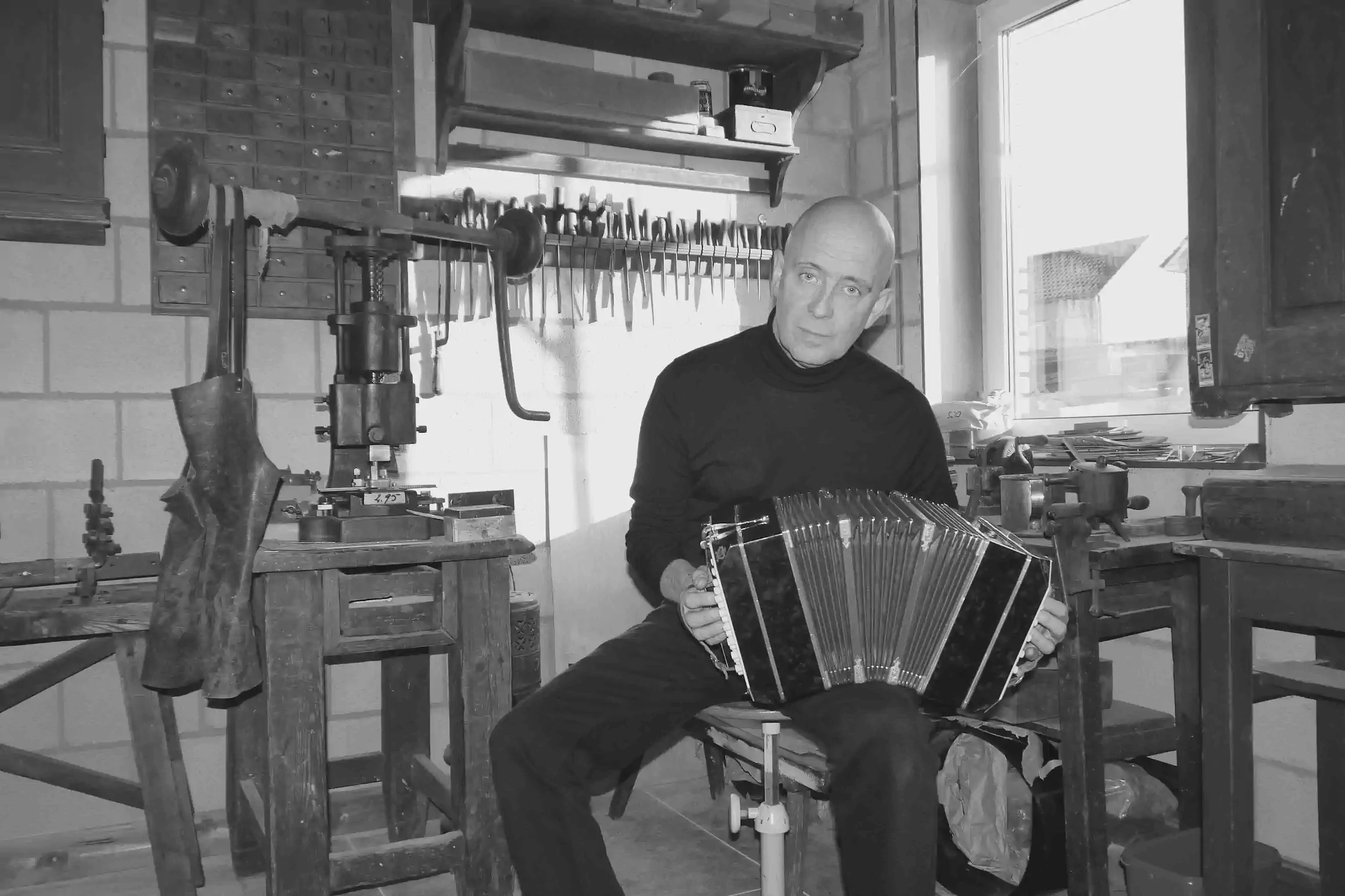
After developing a deep connection to the button accordion, I also discovered the bandoneon, an instrument that is very similar to the accordion in spirit. Almost everything said about the accordion also applies to the bandoneon: the reeds, the lively sound production through the bellows, and the intimate, physical connection.

What makes the bandoneon special, however, is its even greater expressiveness. It is capable of conveying a deep melancholy and passion that makes it, among other things, the undisputed king of tango.

The challenge: An unsystematic sound system
The major hurdle inherent to the bandoneon is its tone system, which has no logical structure. It is alternating tone—the same button produces a different tone depending on the direction of the bellows (pulling or pushing). In contrast to the bayan, whose layout remains logical across the direction of the bellows, the bandoneon is extremely challenging. Especially for improvisation, which is such a big part of my musical identity, I have to master the instrument blindly. The illogical system makes it difficult to start playing late in life, as mental and physical automation requires years of pure dedication. With my other instruments, I simply didn't have the time for that.

Despite all my enthusiasm, I had to recognize my limitations and make a difficult decision. The realization that I would never reach a satisfactory level on this instrument led me to consciously let it go. Nevertheless, I remain fascinated by the instrument and its unique sound character. The bandoneon thus stands as a symbol of the realization that a love of music does not always lead to mastery.

The following, only recording I made on the bandoneon documents the state of affairs at that time.
cover

"Molly"

Synthesizers and the shift to acoustic instruments

The wave of electronics: My synthesizer era
II grew up with the development of synthesizers and was immediately fascinated by this technological revolution. I owned every instrument that came out and witnessed the evolution of sound generation up close. Since the 1970s, there have been groundbreaking developments that have shaped music globally. One particular event I remember was when the Yamaha DX7 came out in the 80s. It redefined the sound of an entire era and demonstrated the potential of digital frequency modulation. Earlier synthesizers had their own special character—their analog oscillators, filters, and modulation capabilities created sounds that could only be electronic. They were instruments of new creation.

The shift to acoustics
Later, however, instruments came along that were designed solely to imitate other instruments. Today, these sound incredibly good. But this is where I began to distance myself. I often asked myself, "What am I actually doing here?" I played the keyboard and tried to imitate a guitar, saxophone, or strings as faithfully as possible. I found this totally absurd. The immediacy and physical response of my acoustic instruments was missing; instead, I was acting as an imitator. That's why I gradually sold these instruments. For me, this development has come to an end, as the limits of imitation have been reached. Today, acoustic instruments come first, because they offer the pure, lively sound and direct haptic connection that no sampler or emulator can really replace. The synthesizer was an exciting, formative era, but it paved the way back to the authenticity of acoustic sound.

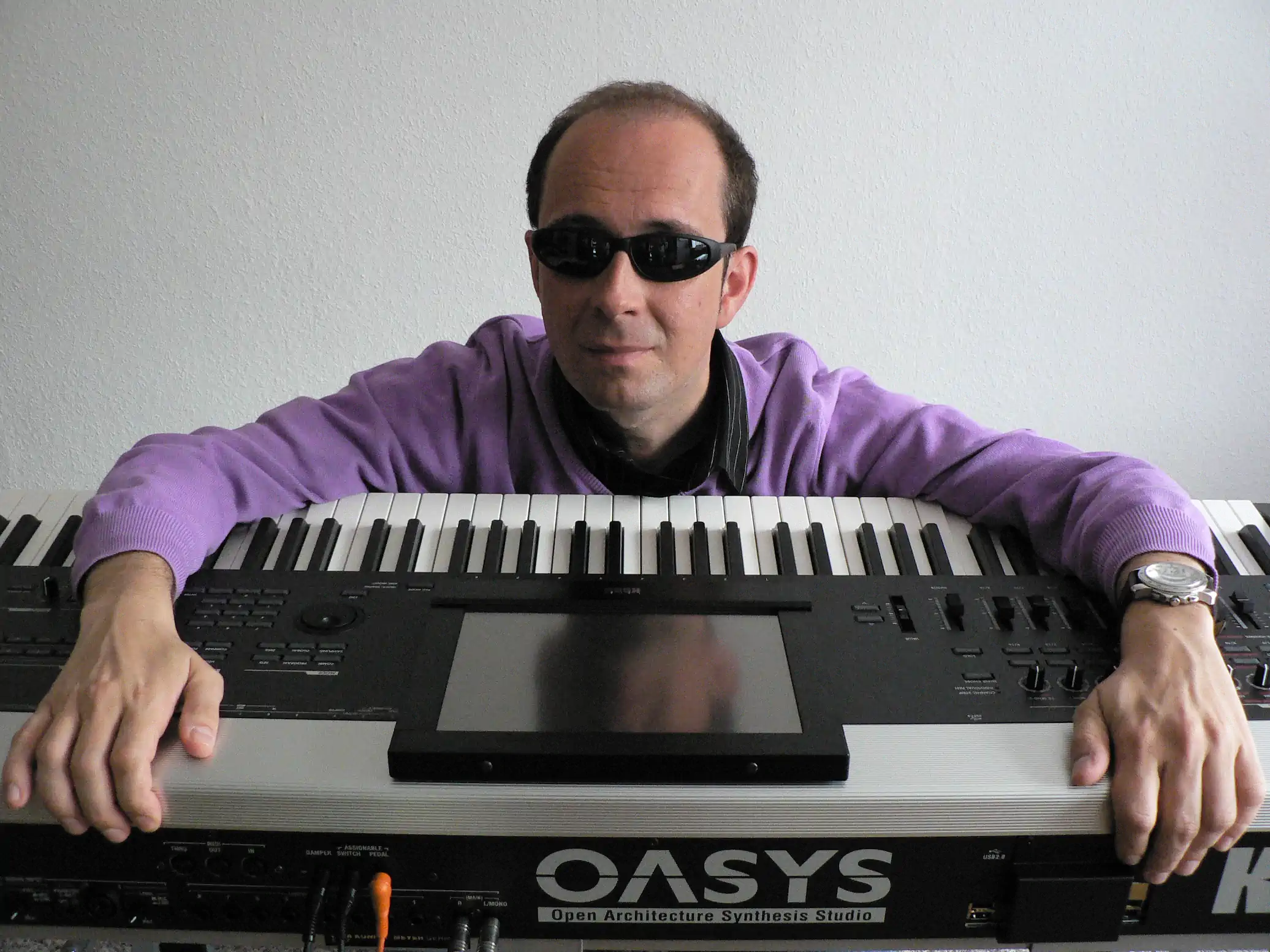
Yes, that's me in the photo!

Contents of this website - What should be considered?

I look forward to hearing from you. The contents of this website are protected by copyright. If you would like to use audio recordings, videos, photos, workshops, or sheet music, please contact me. I can offer you a straightforward solution.

However, I would be delighted if you shared the link to my website!

Important pages

HOME

piano

recordings

books

projects

Contact

(+49) 2822 51046

(+49) 170 55 99 118

thiloplaesser@aol.com

© 2013 - 2026 Thilo Plaesser