The paradox of learning
I find it ridiculous to define musical identity solely by naming teachers. It is common practice to mention the name of a famous teacher first in programs and biographies—an identification that says more about musicians' search for legitimacy than about their actual musical development. Only in the case of a young musician might this make some sense during the orientation phase.
But the central truth in musical learning is:
I am my own most important teacher.
The true path to independence
Learning is an active process that requires the following elements:
Questioning: Constantly critically examining what you have learned.
Be curious: The driving force behind looking beyond the boundaries of your own field of expertise.
Learning from others: The ability to absorb inspiration without imitation.
Be open: The willingness to revise your own positions and allow new ideas.
THAT is the most important thing.
Real teachers are undoubtedly important, but only if they teach independence and do not make students dependent on them. A truly good teacher is characterized by the fact that, after a certain amount of time, they can let go of their students and actively encourage them to try something else. I have always kept this in mind in my teaching activities!
The universal school of music
My real teachers were and always will be those I have listened to or played. It is essential to engage intensively with composers and musicians—they are the silent mentors.
II have always been on the lookout for new music and new teachers. This happens through deep listening and experimentation. For example, when I listened to music (improvisations) by Keith Jarrett or Claude Debussy, I played it back, improvised it, in order to understand the musical language. The crucial step, however, is not to imitate, but to create your own elements.
That is learning and teaching at the same time! Teaching yourself—that is the core of musical development.
My teachers—gratitude and critical distance
Looking back, I was fortunate to have the right real-life teachers at the right time. I had several of them. Nevertheless, I now view some of these teachers very critically—a healthy, professional distance is part of one's own growth. But I would like to mention two positive examples!
Two examples illustrate the quality of good mentoring:
Mr. Friedhelm Floer (1942–2025), my first teacher: He not only taught me the basics, but also saved me from doing stupid things. When I was young, I wanted to drop out of school to play in a band. He didn't persuade me, but convinced me to take a different path by showing me the long-term prospects. He also introduced me to improvisation right from the start.
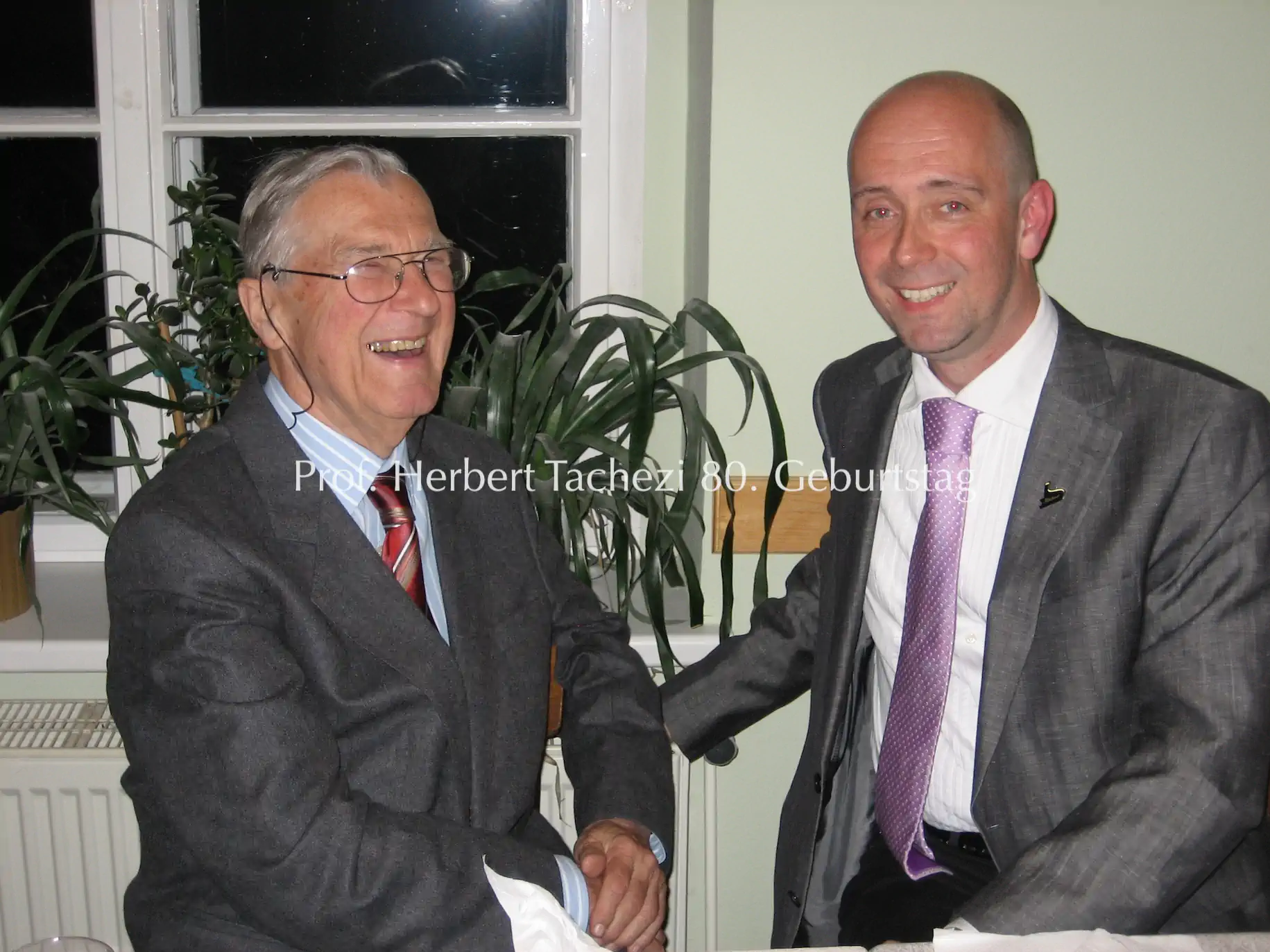
Prof. Herbert Tachezi (1930 - 2016), my teacher in Vienna: He not only guided me and motivated me to get the best out of myself, but above all encouraged and guided me to always do my OWN, individual thing. His motto, "Never play a piece twice in the same way," has become the guiding star of my improvisation. I fondly remember how we improvised jazz and contemporary music on the organ and piano – an encounter for which I am deeply grateful.
Both teachers were, how could it be otherwise, wonderful people. I often think back on those formative times!
Conclusion
Teachers who lead students to independence are the true pioneers. A musician's true identity does not come from the name of a famous teacher, but from the musical language they have created themselves.