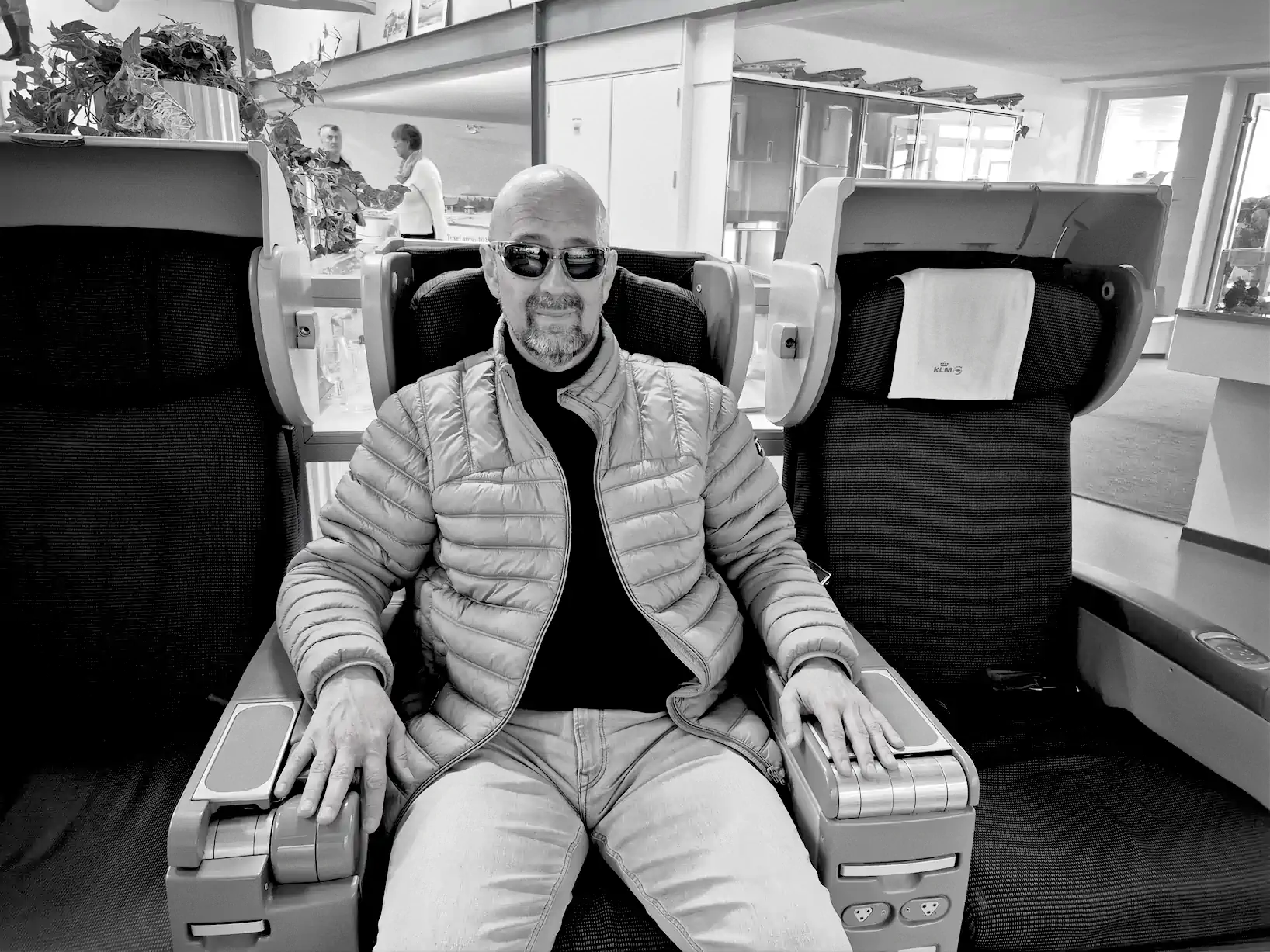
From classical training to spiritual improvisation
My musical development can be clearly divided into two phases: EARLIER (training and institution) and TODAY (freedom and research), with IMPROVISATION always being the central common thread.
Today! Freelancing, synthesis, and spirituality
Since 2003, my work has focused on freelance activities as an instrumentalist, author, and lecturer in the field of improvisation. This freedom has allowed me to engage intensively with a diverse range of instruments and musical cultures: from the bayan and pressure wind harmonium to the fretless bass and the meditative guqin.
The initial fascination with synthesizer technology gave way to a conscious return to acoustic instruments and analog technology, driven by the conviction that lively, modulatable sound is the most honest form of musical expression.
Key areas of activity
Musical synthesis: My music today is constantly changing, drawing on Asian, Oriental, and Celtic music, the timeless spirituality of Mahalia Jackson, and classical modernism.
Research and publication: I am dedicated to researching the Viennese harmonium maker Teofil Kotykiewicz and the life and work of Mahalia Jackson. The publication of the book "it came out of the blue" cemented my reputation as an author and lecturer on piano improvisation.
Educational projects: From 2008 to 2012, I founded and ran a piano school for adults in Vienna.
Spiritual dimension: My music is constantly changing and is based on the principles of Taoism, qi gong, and Zen meditation. Improvisation is the method used to translate this inner attitude into lively, individual music that is always spiritual.
Early days - Foundations, institutions, and teachings
The musical foundation was laid in a classical environment. My journey began with my first music lessons in Recklinghausen and preparatory studies.
From 1986 to 1992, I studied Catholic church music and instrumental pedagogy intensively at the Robert Schumann University of Music in Düsseldorf, graduating with the State Cantor Examination (A-Examen).
At the same time, I was greatly influenced by several years of private study with David Pizarro in New York, one of Marcel Dupré's last American students.
My academic studies took me to Vienna, where I studied choral and orchestral conducting from 1992 to 1994 and completed a private postgraduate course in improvisation and literary performance with Prof. Herbert Tachezi – thus also establishing improvisation as an academic discipline. The many years I lived and worked in Vienna also had a particular cultural influence on me.
Professionally, this era was marked by a variety of institutional positions:
Church musician and cantor (in Recklinghausen, Vienna, Bochum, and Emmerich, among other places, from 1986 to 2001).
Performances, concerts as choir and orchestra conductor, organist, and pianist.
Teaching activities at municipal music schools in Austria (Ybbs, Kottingbrunn) and specialist lectureships, for example at the Episcopal Church Music School in Essen (1995–1999).
Obtaining a teaching license for music (secondary level 1) in 2002 marked the completion of formal pedagogical qualifications and professional experience at a comprehensive school.